Molt is the feather reset
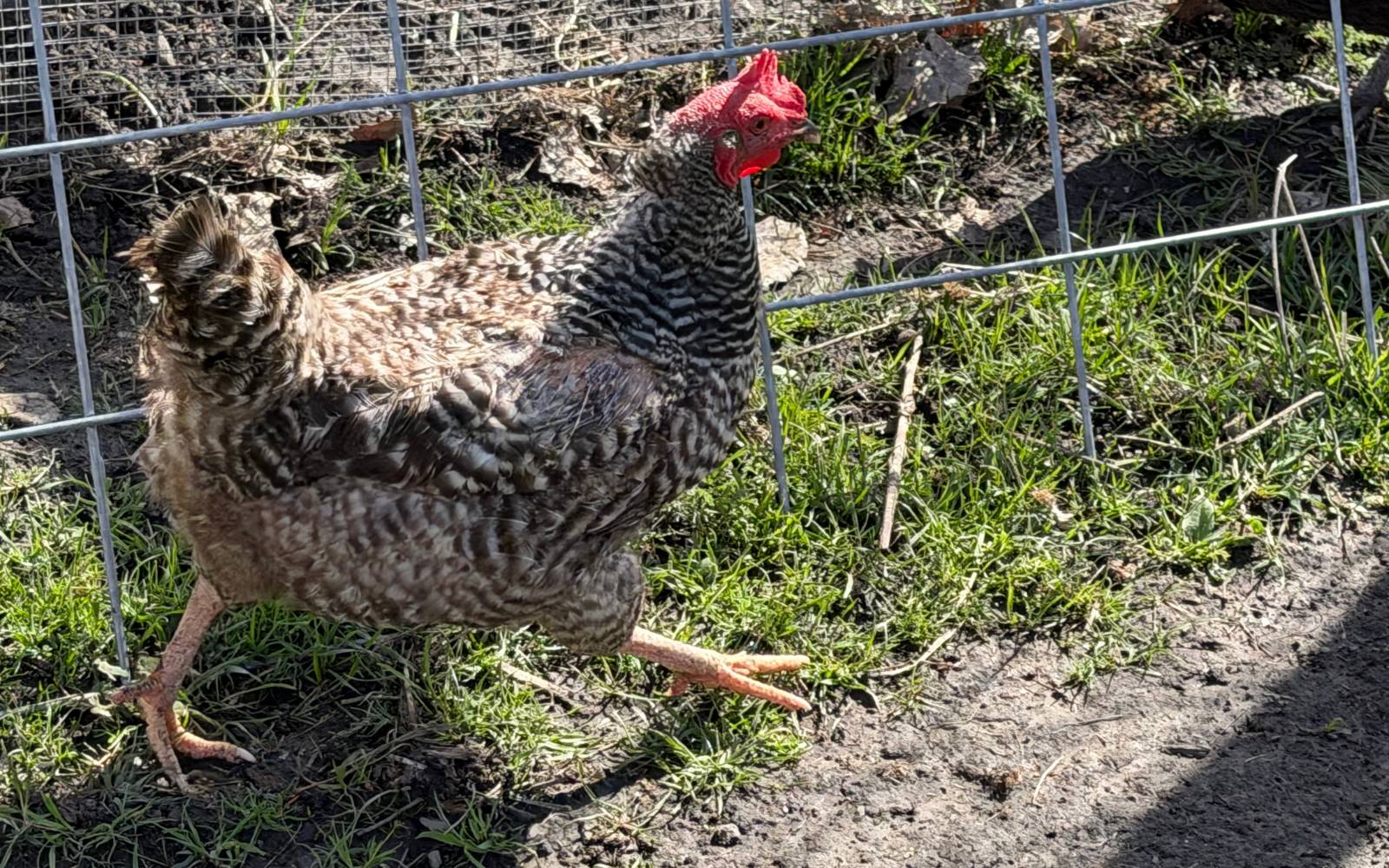
Molt is when a chicken drops old feathers and grows new ones. It usually happens as days get shorter, often in fall, though timing varies by bird. Some hens molt politely and just look a little rough. Others look like they slept in a lawn mower.
Feathers are mostly protein, so molt takes real resources. Egg laying often slows or stops because the bird is putting energy into new feathers. That is normal. What I watch for is whether the bird is molting and functioning, or molting and failing.
Behavior matters more than ugliness
A molting hen can look terrible and still be fine. I care more about whether she eats, drinks, moves with the flock, dust bathes, and gets to the roost. If she is active but ragged, I do not panic.
A bird that is puffed up, hiding, losing weight, breathing hard, or getting bullied off feed is different. Molt can expose weak birds because they have less reserve. The feathers are the obvious part. The behavior is the useful part.
I look at the pattern of feather loss
Normal molt often starts around the head and neck, then moves over the body, though birds do not all follow the same neat diagram. Pin feathers are sensitive. I try not to handle those areas more than needed because it can hurt and they can bleed if broken.
Patchy feather loss can also be rooster wear, mites, picking, or stress. If the feather loss is mostly on backs and shoulders in a breeding group, I do not blame molt first. If birds are restless at night, I check for mites.
Feed quality matters
During molt, I care about protein and overall feed quality. I do not throw random treats at the problem and hope feathers appear. A good complete feed, plus sensible higher-protein extras when needed, is better than filling birds with bread or scratch.
I may use mealworms, black oil sunflower seeds, scrambled egg, fish-based treats, or a higher-protein ration for a period, but I keep it measured. The point is to support feather growth, not turn the flock into snack addicts.
Stress makes molt harder
I avoid big changes during heavy molt if I can. This is not my favorite time to introduce new birds, move the coop, change feed abruptly, or let a bully run the yard. The birds are already spending energy.
That does not mean I freeze all management. It means I do not add stress for no reason. A molting hen with pin feathers does not need to be chased by pullets, overbred by a rooster, or forced to compete at one feeder.
Cold weather changes the stakes
A hard molt going into cold weather gets my attention. A bird missing a lot of feathers has less insulation. If she is also thin, low-ranking, or sleeping in a drafty spot, she can struggle.
I check roost placement, wind paths, and whether the molting birds are being pushed to poor sleeping spots. I do not heat the coop casually, but I do make sure the setup is dry and fair.
When molt is not the whole story
I get more concerned if there is weight loss, pale comb, dirty vent, blood, wheezing, swelling, limping, parasites, or a bird that will not eat when separated. Molt can happen at the same time as illness. The fact that a hen is molting does not explain every problem.
My test is simple: if I give her a quiet place with feed and water, does she act interested in living? A tired molting hen usually eats. A sick bird often tells you more when the flock pressure is removed.
My molt routine
I keep feed steady, reduce nonsense stress, watch body condition, check for parasites if the pattern looks wrong, and let egg production drop without trying to force it. The new feathers are the job for a while.
When the feathers come in clean, the bird gains condition, and her behavior returns to normal, I leave it alone. Molt looks dramatic, but the useful response is usually calm, specific, and boring.