Predator protection starts with the assumption that something eventually will test the flock
You have to assume that you’re always being watched by predators and that they’re always attempting to gain access to precious birds through constant testing. The predators will find the weak spots in your coop setup. Plan ahead, overplan, and overbuild. I cannot stress this enough. If a predator ever gets access to your coop or even one of your birds, they will come back in perpetuity. You do not want that around your property. Keep them safe. Keep them locked up.
It’s almost as if paranoia needs to take over your mindset, so think of everything that exists in the wild and imagine it trying to get into the coop. Your birds have nowhere to go and one vulnerability will allow a predator access and the chickens will be defenseless.
Different predators punish different kinds of carelessness
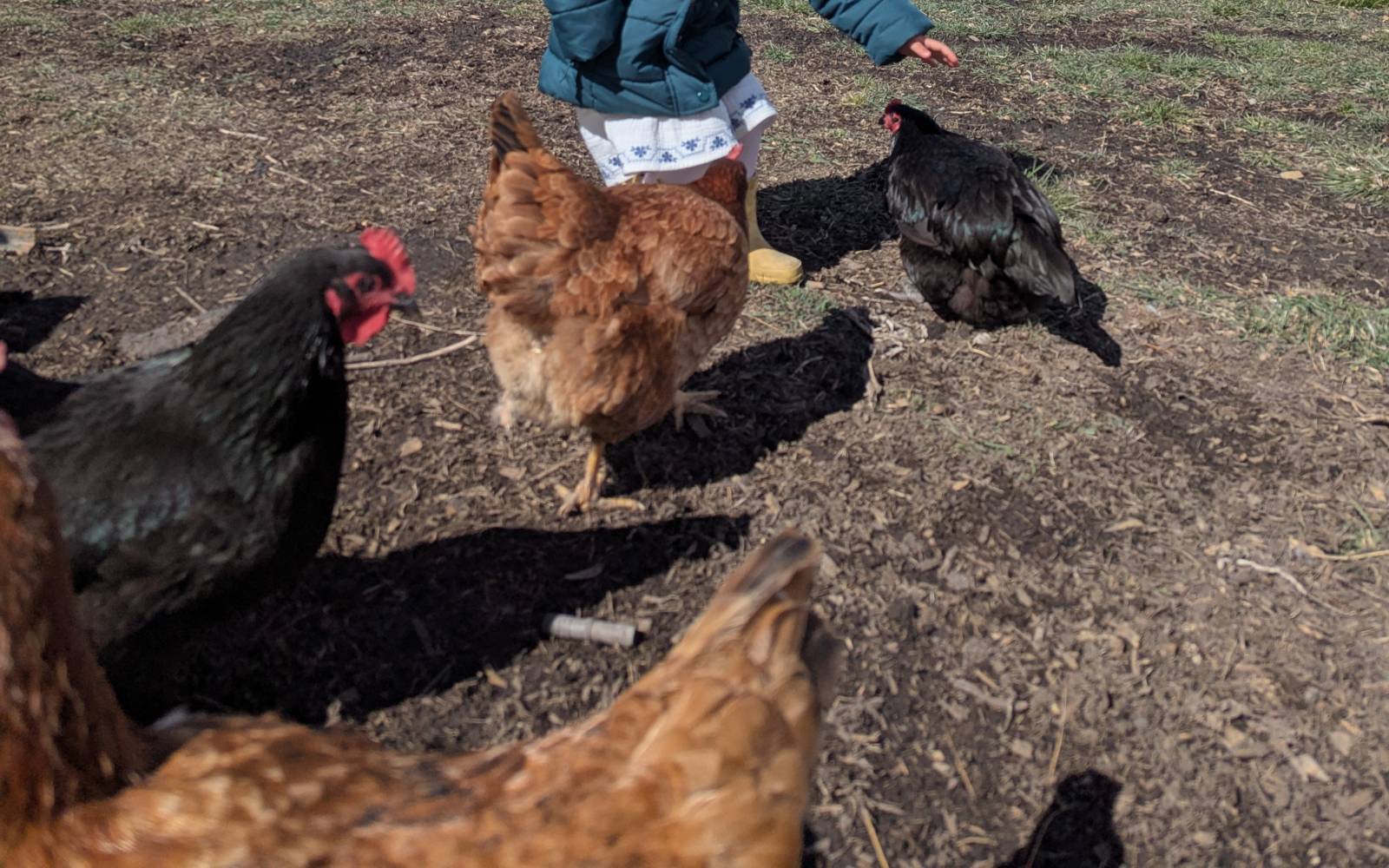
- You will notice that during the day if you let your chickens free-range, they like to spend time undercover if they see a bird flying overhead, good instinct for a chicken would be to get close to a bush or under something that shields them from an aerial attack.
- Coyotes are rare during the daytime and will test your setup near fences and free-range areas in the mornings and evenings. They will always be around at night so if you ever allow your coop to be accessed during the night, a coyote may be the one doing the discovering. Coyotes are everywhere in every part of North America.
- If your property isn’t fully fenced in, a loose dog in the neighborhood or a dog that gets off a leash can cause havoc on your flock. Even a playful dog can do a lot of damage. I have learned this lesson the hard way when neighbors’ dogs escape, they like to come by my house which has not been completely fenced in. Sometimes calling the dog over is the right tactic. Sometimes you have to catch that dog before it kills your flock. One playful dog can traumatize an entire flock for weeks.
- Raccoons come out at night. They are strong, fierce, extremely intelligent. They have very dexterous hands that can figure out how to open latches of all sorts. You should use a clip such as a carabiner or a safety pin style clip in addition to a normal latch on anything that needs to be secured during the nighttime. Raccoons are vicious towards chickens, and you don’t want to find out that the hard way. Use good latches.
- Smaller predators exist, too, such as skunks, weasels, and badgers, and these guys can slip in through some pretty small cracks if you don’t have everything secure.
Most of the predators that you will be concerned with, you never see. Most of them come out at night and are not trying to come anywhere near people, so you might not even realize how many predators exist where you live, but they are there and they will be trying to test the strength of your coop. They have been put to the challenge of trying to break into your coop and it is your responsibility to rise to that challenge and defend the chickens by providing the most secure environment you can.
Night housing is where most preventable losses are decided
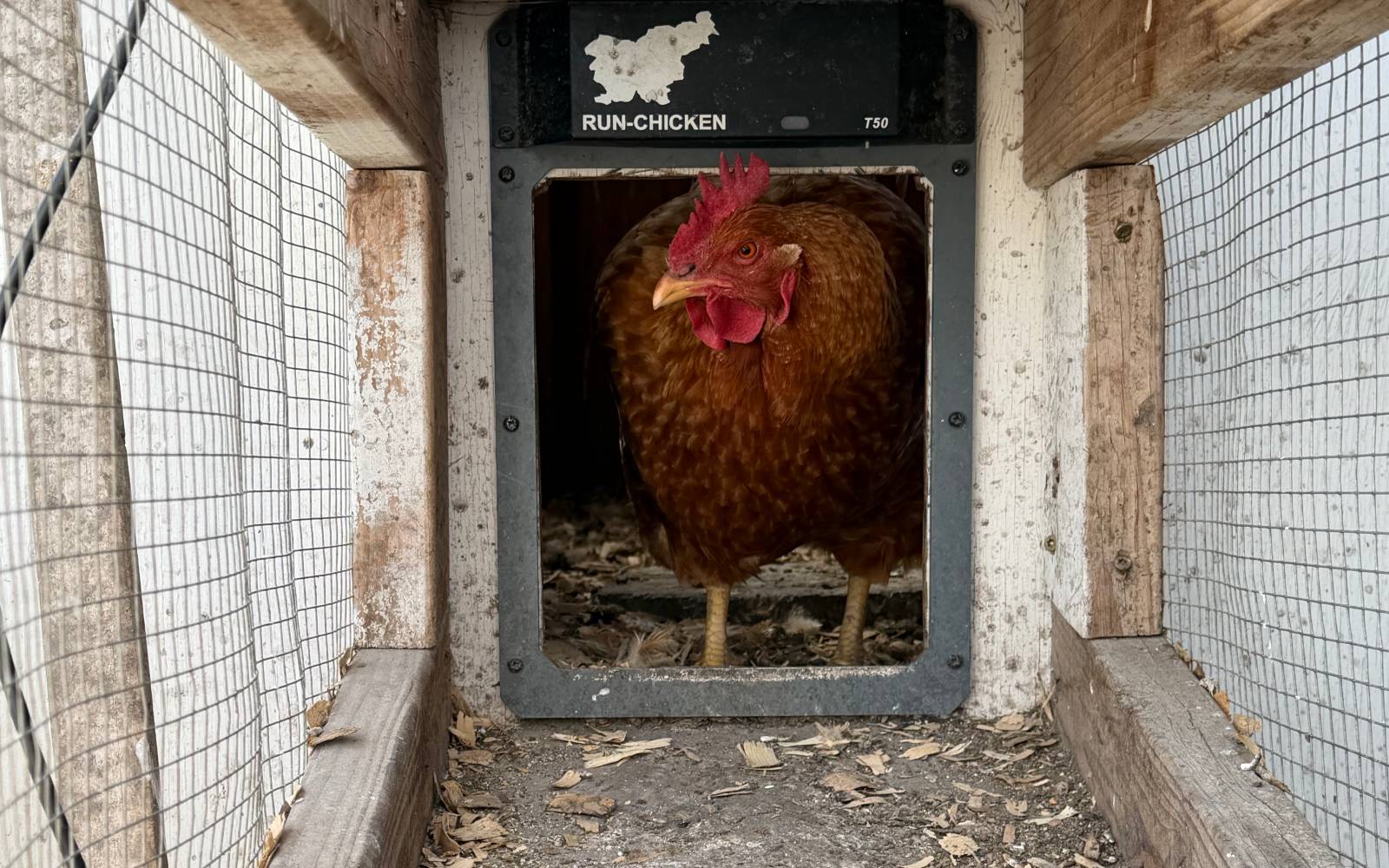
I also think an automatic coop door can be worth the money if your schedule is uneven or you simply do not want dusk lockup to depend on memory every single evening. One example I like is the Run-Chicken T50 automatic coop door. Run-Chicken says it is weatherproof, battery powered, built from aluminum, and can run off sunrise and sunset timing with a light sensor. I would still want a secure overall coop and decent latches, but a reliable automatic door takes one common point of failure out of the nightly routine.
A strong coop that can close the door automatically and securely every night, solves a large share of the problem of security. The doors should shut cleanly with no gaps for any size of animal. The latch should not be easy to open and openings should be covered with strong and durable materials, flimsy wire, and even thin wood can be chewed and scratched through so build your coop as a robust structure.
A quick evening head count helps too. Keepers who know how many birds should be inside are less likely to leave one out under a bush because the flock seemed generally accounted for.
The run needs to be built like a real barrier
Chicken wire has its place, but real predator resistance usually means stronger material, better framing, and attention to the bottom edge. If something can push under, pry through, or tear at a weak connection point, then eventually something may.
Many chicken keepers and coop builders bury hardware cloth or mesh wire in the ground or bury it at an outward angle to discourage digging predators. The specific method that you use to secure this area isn’t important, but you must not leave the lower perimeter vulnerable to digging attacks. Predators naturally try to dig the dirt down enough to get under things. They’ve learned that it works on other systems, and they will try it on yours. Make it impossible for them.
Free ranging multiplies the need for judgment
I don’t like the idea of losing a bird while allowing them to free-range, and I’ve been fairly lucky over the years. It will depend on your neighborhood and what your neighboring properties are like, but I like the idea of allowing a little risk in exchange for letting my birds out every day to roam, forage the grass for bugs, and do chicken things that they love doing. Free-ranging is an acceptable risk that I take because the benefits are so high. You will have to make those decisions on your own. Whether you can stomach losing a chicken because of your desire to let them free-range will be up to you.
Free-ranging is not automatically foolish and it’s not automatically wise. It’s one of the parts of flock management that can have negative consequences, but it is also something that the chickens absolutely love and the keepers too!
Cheap habits prevent expensive lessons
- Make sure latches have clips to make them raccoon proof.
- Store feed so that rodents can’t have access to it.
- Always walk and check your setup for weak spots especially along fences.
- Aerial attacks from birds like hawks, and other raptors are a reason to give covered areas for your birds to prevent those types of attacks.
- If you noticed that an animal has tried to penetrate or attack your birds, you must take steps to fortify that area further. Luck has nothing to do with keeping your chickens alive.
Understand that animals are always going to be trying to kill your chickens and take your. If you get complacent with your coop security, you could cause your flock to succumb to an early death. Remember, you are responsible for the safety of your birds.
The safest flock is usually the flock managed most consistently
Gadgets are super useful for security and for identifying threats. Some modern chicken, keeping tools are automatic doors that will open in the morning and close at night that will alleviate a lot of stress and ensure a safe coop all night every night. Motion sensing security lights are great to scare off skittish animals like coyotes and fox having some surveillance cameras help you to identify who is roaming through your neighborhood and sniffing out your coop. It’s also great for solving unexplained mysteries.
Predator protection might be the most serious consideration that you need to make. You’re not just feeding chickens. You are caring for them from infancy to old age and their survival depends on your vigilance.