The most useful health skill is knowing what normal looks like
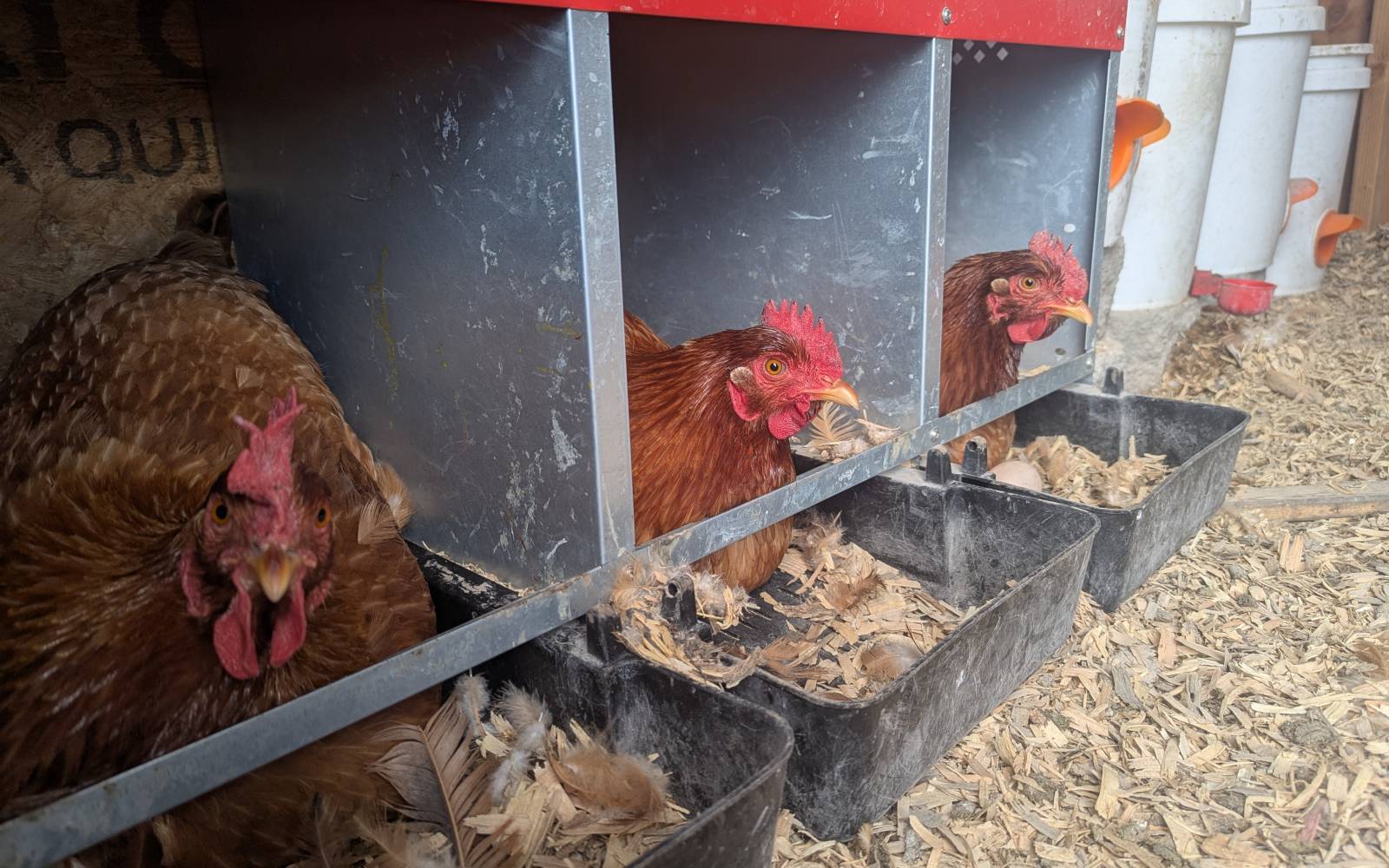
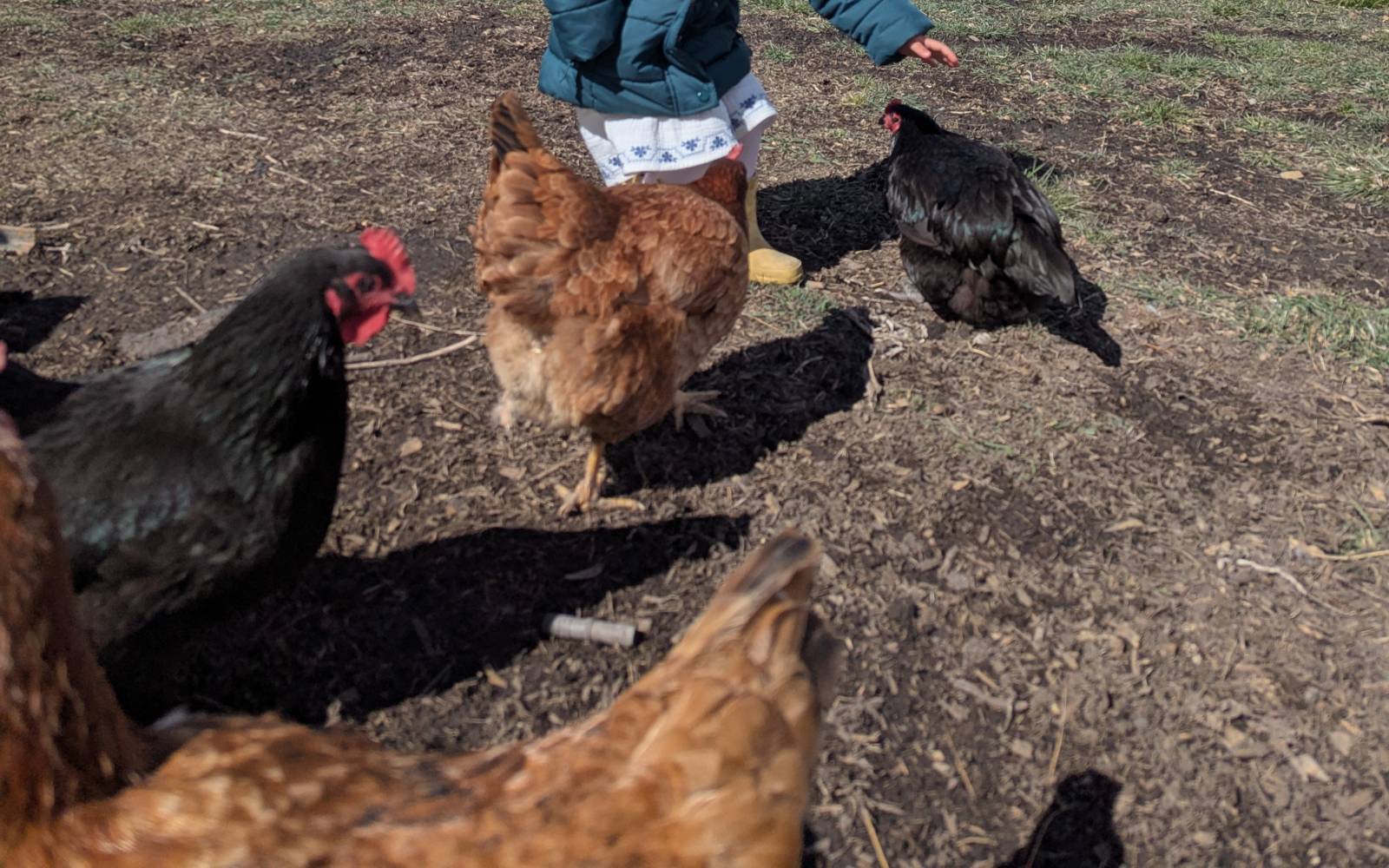
A flock has a routine if you watch it long enough. Birds come out of the coop in a certain order. They hit the feed pan with a certain amount of interest. They scratch in favorite spots, dust bathe where the soil is loose, settle into shade during heat, and roost in a pattern that usually makes sense for that group.
That normal pattern is more useful than a checklist from a book. When one hen hangs back from feed, stands with her feathers puffed, keeps her tail low, or lets the others move around her without joining in, I pay attention. She may not be dying. She may just be starting to have a problem. That is the moment when checking her is worth the time.
Feeding time tells the truth fast
Feeding time is one of the easiest health checks because chickens are not subtle around food. A healthy bird usually notices feed quickly, moves toward it, and competes for a place. Even lower-ranking hens will usually find a way to get something.
If a bird that normally comes running stays back, eats slowly, pecks once and quits, or acts interested but cannot seem to swallow, I want to know why. I check whether she is being bullied away from food, whether her crop feels wrong, whether she is limping, whether her comb looks pale, and whether she is alert or dull. Kitchen scraps make this even easier because most birds will show their real appetite when something fresh lands in the yard.
A quick hands-on check is worth learning
You do not need to turn every morning into a veterinary exam. A few seconds can tell you a lot once you know where to look.
- Watch how the bird walks. Limping, sitting too much, stumbling, or using a wing for balance deserves a closer look.
- Look at the comb and face. A healthy laying hen often has a red, full comb. A pale, shrunken, purple, or dry-looking comb can be a clue, especially when it comes with other signs.
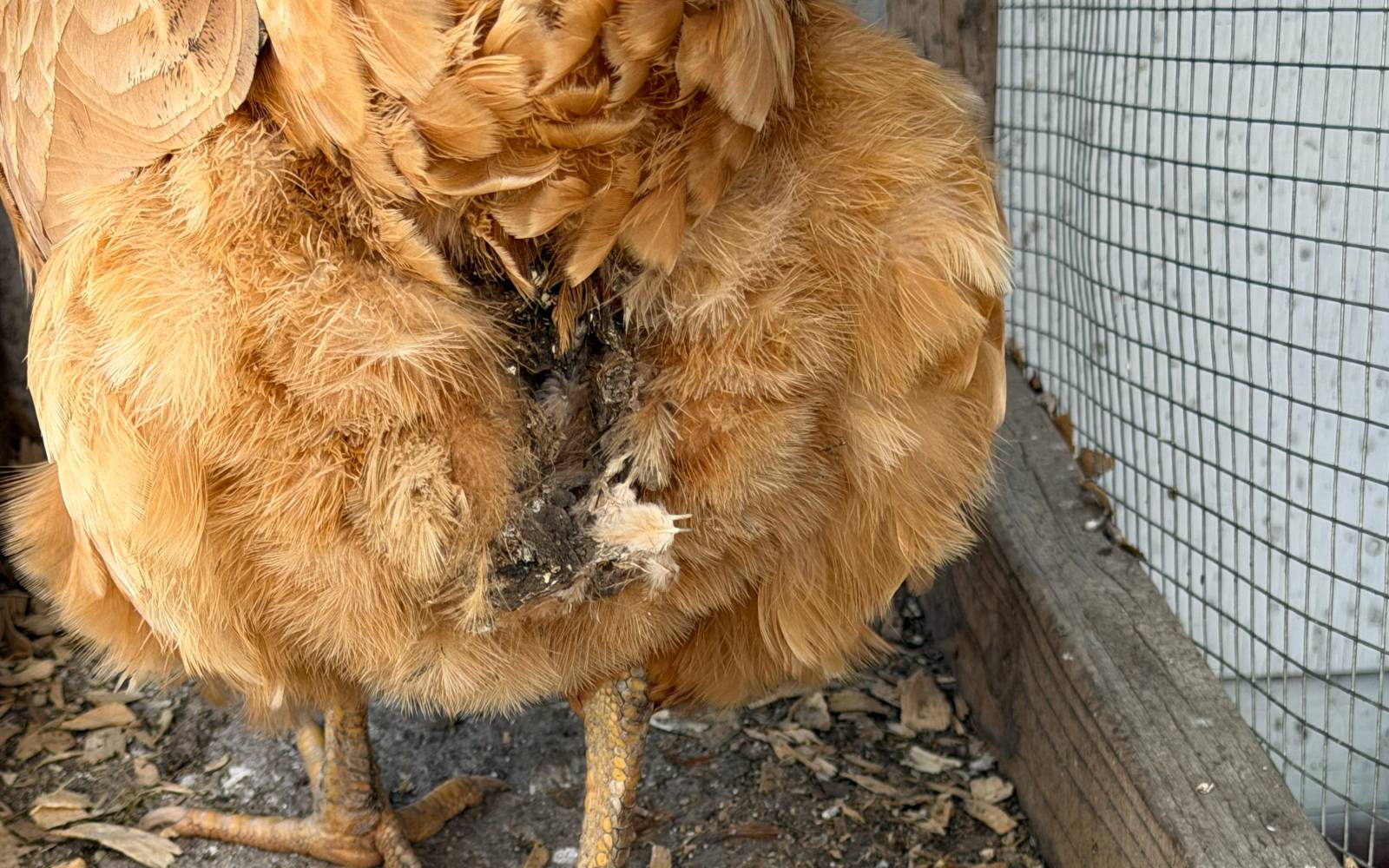
- Check the vent area. Built-up droppings, redness, swelling, missing feathers, or irritation can point to diarrhea, parasites, egg-laying trouble, or a bird that is not cleaning herself well.
- Look at droppings in context. Some variation is normal, especially with table scraps, greens, heat, and water intake. Repeated watery droppings, blood, worms, or a sudden change across the whole flock should not be ignored.
- Pick birds up once in a while. You learn what a healthy weight feels like. A bird can look fluffy and still be thin under the feathers.
- Feel the crop. The crop can be full in the evening after feeding, but it should be mostly empty by morning. A crop that stays hard, swollen, squishy, sour-smelling, or slow to empty needs attention.
The crop sits at the lower front of the neck and chest area. It is basically a holding pouch for food before digestion continues. New keepers often miss crop problems because the bird still looks upright and feathered. Feeling the crop at night and again the next morning can tell you whether food is moving through like it should.
Common signs that deserve attention
The signs I take seriously are not mysterious. A bird sleeping during the day while the rest of the flock is active gets my attention. So does open-mouth breathing when it is not hot, repeated sneezing, discharge from the nostrils, raspy breathing, a tail held low, a hunched posture, a wing hanging wrong, or a bird that lets me walk right up to her when she normally avoids being handled.
Watery droppings by themselves are not always an emergency. Chickens eat wet food, drink more in heat, and produce different droppings through the day. But if one bird keeps having messy droppings, loses energy, gets a dirty vent, or stops eating normally, I do not write it off as nothing. The pattern matters more than one dropping on one morning.
Parasites are common enough that you should look for them
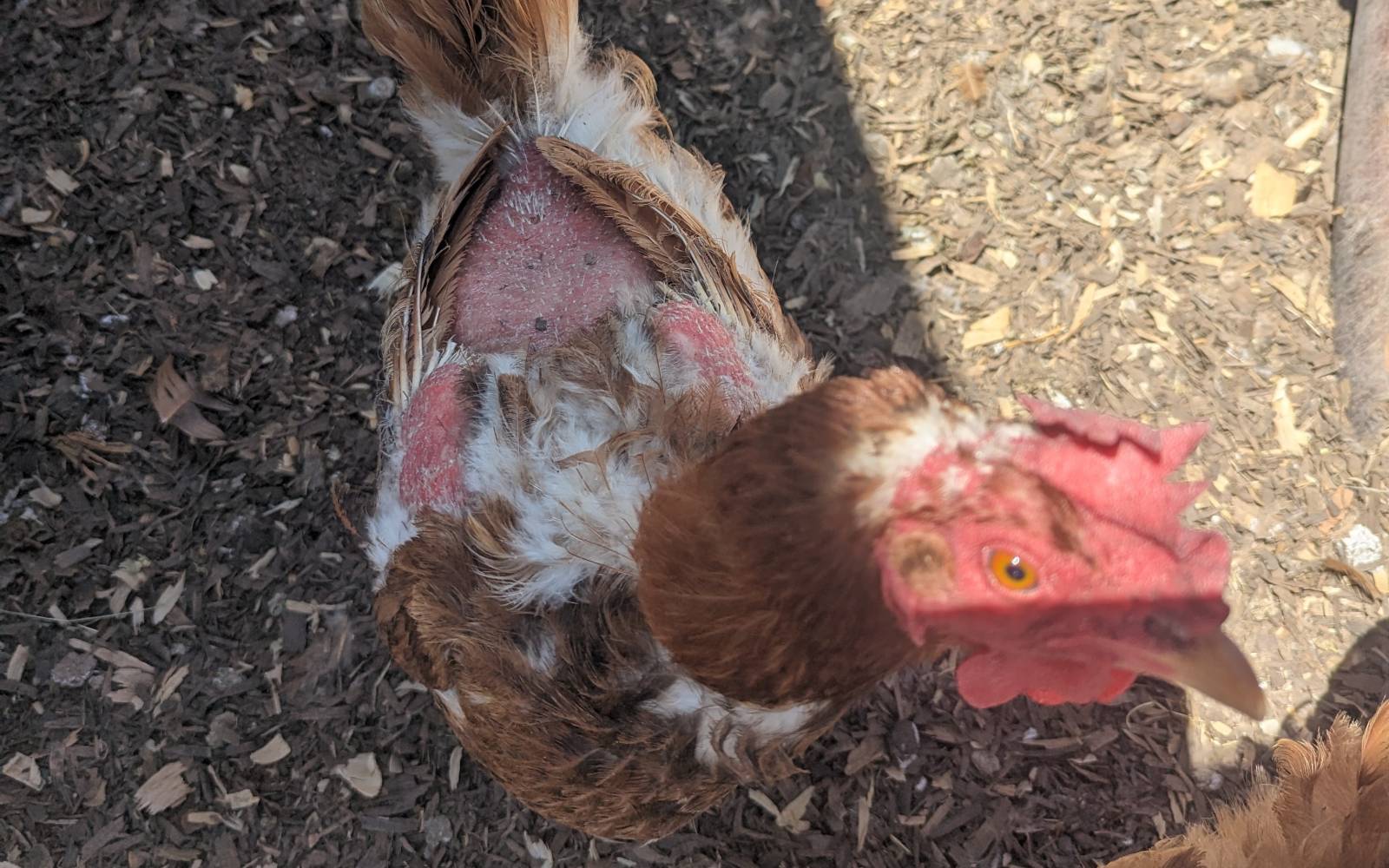
External parasites are not rare in chicken keeping. Mites and lice can show up around the vent, under the wings, near the base of the feathers, and sometimes along the back or neck. Part the feathers and look at the skin. You may see crawling specks, irritated skin, crusty buildup, feather damage, or small egg clusters stuck near feather shafts.
Dust bathing helps chickens manage their bodies, but I do not rely on dust baths alone when I see real parasite signs. I like birds to have access to dry dirt or sand where they can dust bathe naturally. If I find an actual infestation, I treat it like a management problem, not a personality flaw in the bird. The bird, the coop, bedding, roosts, and nest areas may all need attention or the problem can come right back.
Internal parasites are harder to see from the outside. Weight loss, dull comb color, rough feathering, diarrhea, weakness, and poor laying can all point in that direction, but they can also point to other problems. That is why I look at the whole bird instead of guessing from one symptom.
Feet, crop, and breathing get their own category
Feet take abuse. Chickens scratch, jump down from roosts, walk through manure, step on rough ground, and sometimes hide foot pain until it is obvious. I look for swelling, heat, scabs on the bottom of the foot, limping, curled toes, and birds that avoid putting weight on one foot. Bumblefoot is easier to handle when it is caught early than when the foot is badly swollen.
Crop trouble is another thing I do not ignore. A crop that is full at night is normal. A crop that is still full the next morning is not something I like to see. A sour smell, liquid sloshing feel, hard packed mass, or bird that keeps stretching her neck can mean food is not moving right.
Breathing issues can move through a flock, so I take them seriously. Occasional dust sneezes happen. Repeated sneezing, wet nostrils, bubbles around the eyes, coughing sounds, rattly breathing, swollen face, or birds standing with open beaks in normal weather should be investigated quickly.
Isolation is a tool, not a punishment
Every keeper should have some way to separate a bird. A dog crate, small pen, stall, garage corner, or wire cage can make a big difference. Isolation lets you know whether the bird is eating, drinking, pooping, and improving. It also keeps a weak bird from getting shoved around by the rest of the flock.
I do not isolate every bird for every small thing. Sometimes I watch first. But when a bird is weak, injured, bleeding, badly limping, not eating, or getting picked on, separation gives me control. I can offer water, feed, warmth if needed, and a quieter place to decide what happens next.
Good health usually comes from plain management
A lot of chicken health is not dramatic. Clean water matters because chickens will drink dirty water if that is what they have. Dry bedding matters because damp bedding grows smell, mold, flies, and foot problems. Airflow matters because a sealed-up coop can hold moisture and ammonia even when it feels protected from the cold.
Feed matters too. Chicks need chick starter. Laying hens need a layer ration or a complete feed that fits their age and purpose. Scratch grains and kitchen scraps are extras, not the foundation. I like feeding scraps, but I still want the birds to have a proper feed available so the diet does not turn into bread, lettuce, and wishful thinking.
Space matters more than people want to admit. Too many birds in too little coop or run space creates stress, dirty bedding, feather damage, bullying, and disease pressure. When the housing is wrong, you end up treating symptoms that came from crowding in the first place.
When I would get outside help
There are times when watching is not enough. A bird that cannot stand, is struggling to breathe, has a swollen abdomen, is bleeding heavily, has a prolapse, cannot pass an egg, has repeated crop problems, or is declining fast needs more than casual observation. A poultry vet is not always easy to find, but serious problems should be treated like serious problems.
The best health habit is not panic. It is noticing. Learn the normal flock, check the bird that breaks the pattern, isolate when needed, and fix the plain management problems before they turn into health problems. That approach will not prevent every loss, but it gives your birds a much better chance.