Most hens do not need names
I do not name every hen. In a small flock that might sound cold, but after you have enough birds, naming every single one gets silly fast. Some birds are productive and healthy and still not memorable. They are good hens, but they are part of the group more than individuals I need to talk about.
The hens that earn names are the ones I can identify without trying. A habit, a walk, a voice, a place they always stand, a strange preference, or a record in the flock makes the name stick.
A named hen usually has a job or a pattern
Some hens earn names because they are excellent layers. Some because they raise chicks well. Some because they always find the one gap in a fence. A few get named because they are so irritating that not naming them feels dishonest.
That is the part people miss. A name is not always praise. Sometimes it is record keeping. If I say the name and immediately remember that she hides eggs behind the feed cans or starts trouble when pullets are introduced, the name is doing useful work.
Personality is useful when it predicts behavior
I do not care about personality in the fluffy sense. I care about whether a bird is predictable. The hen that stays calm during chores is useful. The hen that sounds the alarm every time a shadow moves is information, even if the information needs filtering. The hen that always gets pushed off feed tells me I may need a second feeder during winter.
When you watch long enough, the flock stops looking like a pile of chickens. You start seeing who is early to the door, who hangs back, who eats first, who sleeps in the same spot, and who changes when something is off. The named birds are usually the ones that teach you those patterns.
Names can help with health checks
A named hen is easier to track. If I know she normally runs to scratch and now she is standing still with her tail low, I catch the problem sooner. If I know she always lays a dark egg and that egg disappears for two weeks, I have a clue. If I know she has always been thin and active, I do not confuse her normal build with sudden weight loss.
That kind of observation is better than walking into the yard once a week and asking whether the flock looks fine. A flock can look fine from ten feet away while one bird is slipping. Names help me notice the individual bird before the problem becomes obvious.
The birds that never get names still matter
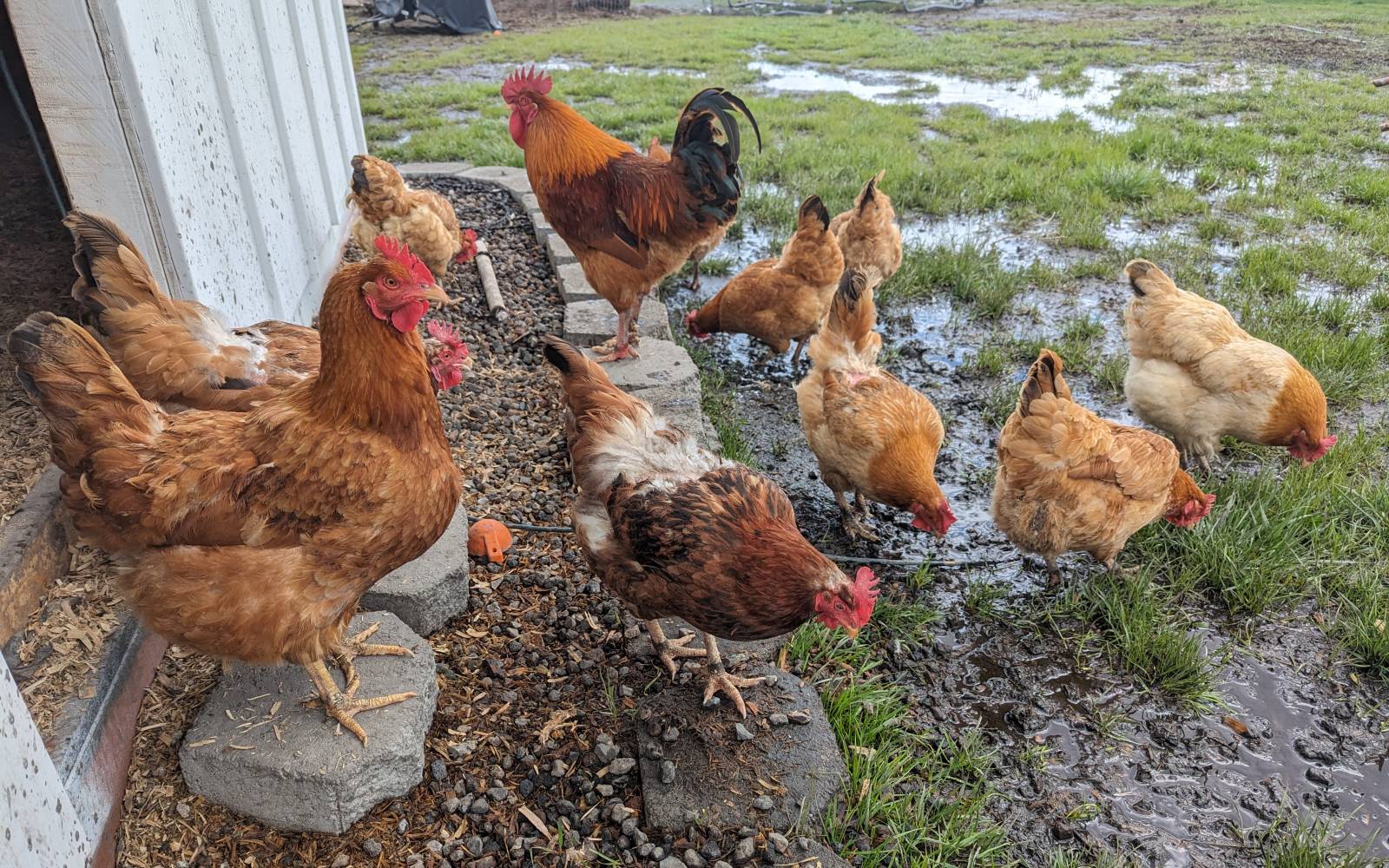
Most hens in my yard are known by type, color, or group. That is enough. Not every bird needs a story. A steady brown layer that eats, lays, dust bathes, roosts, and never creates trouble is a good bird even if I never give her a name.
In fact, some of the best hens are almost invisible because they do everything right. They do not need attention. They do not require special handling. They just fit the system. That is useful, even if it does not make a cute paragraph.
Why a few names stay
The names that last are tied to usefulness, trouble, or memory. A hen that raised a batch well, survived a bad winter, warned the flock before I saw the dog, or kept laying when everyone else quit becomes part of the yard history. That is not a slogan. It is just what happens when you do chores around the same birds long enough.