Field note · August 20, 2026
Why I still keep hens after they stop laying
An older hen's value is easier to see when you track comfort, flock behavior, and the work she still does.
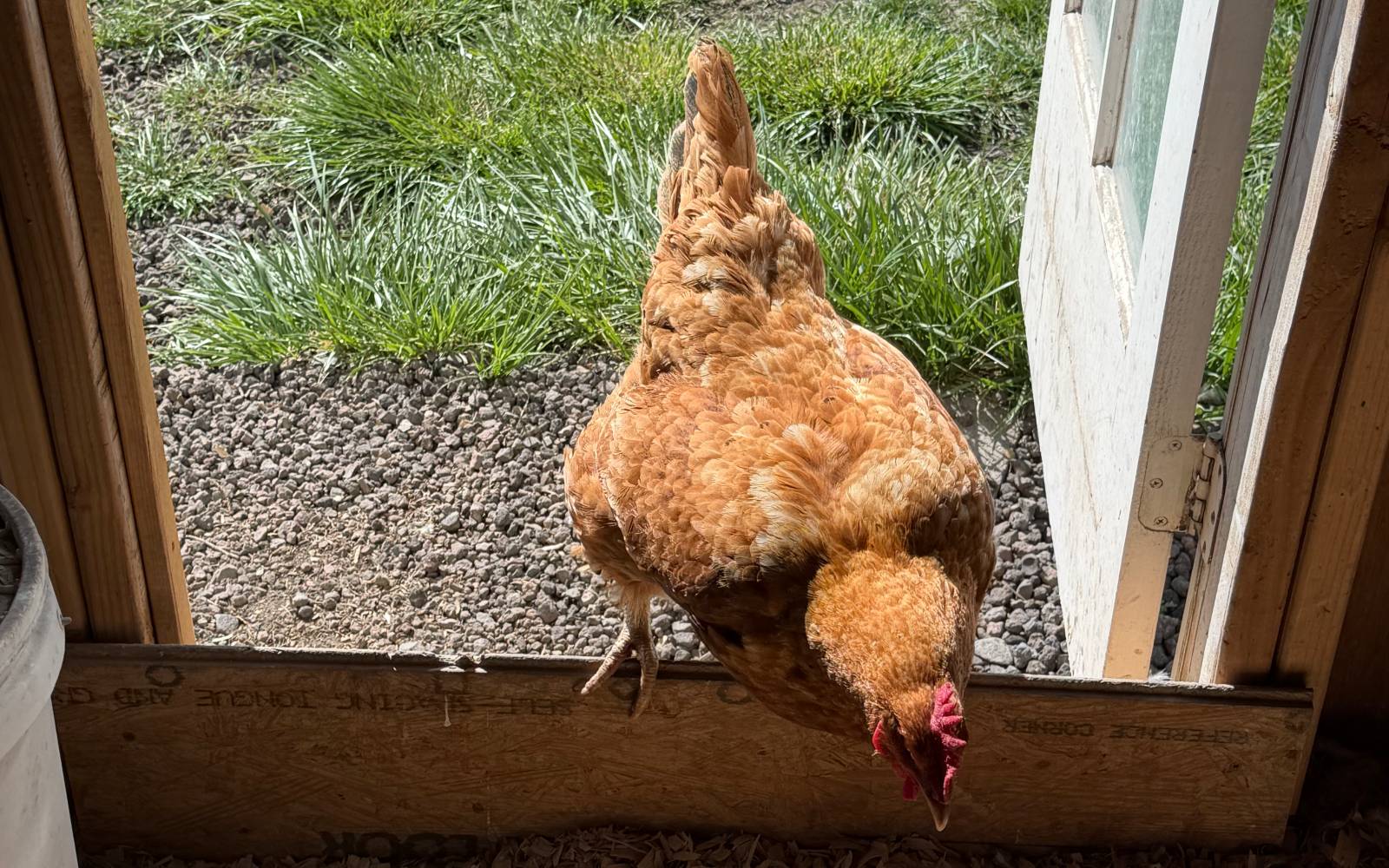
Keep an older hen while she can move, eat, rest, and participate comfortably. Judge the bird in front of you, not her age or last week's egg count.
The egg basket is a poor retirement policy
A laying record tells me what a hen produces. It does not tell me whether she is comfortable, moving normally, or participating in the flock. Older hens often lay in shorter sequences, take longer breaks, and recover more slowly after molt. Those are management facts, not an automatic reason to remove them.
I separate production from welfare when I make the decision. A hen that lays rarely but eats well, moves without pain, keeps a stable weight, and follows the flock has a different outlook from a hen that is losing condition or struggling to reach the roost. The second bird needs attention regardless of how many eggs she laid when she was young.
What older hens teach the younger birds
Experienced hens know where shade lasts through the afternoon, which alarm calls matter, and when the flock is expected at the coop door. Newer birds copy those routines. I notice the effect most at dusk: a steady older hen moving toward the roost can settle a group that would otherwise mill around the run.
Not every old hen becomes a matriarch. Some are pushy, some are solitary, and some lose rank. Social knowledge still exists, and removing a familiar bird can change the group's routine. I watch the flock for several days after any loss or separation.
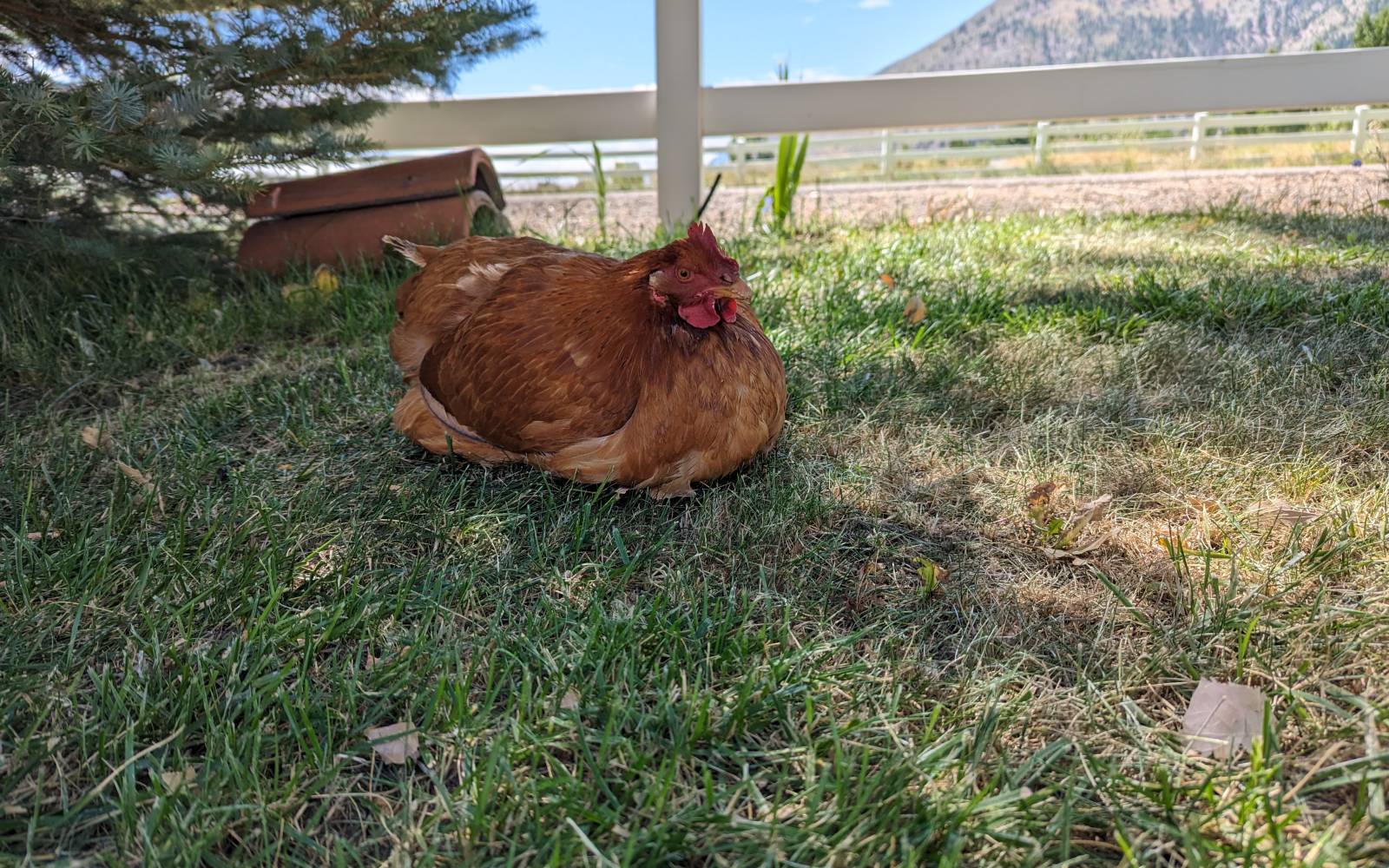
The monthly check changes with age
I weigh older hens more often because gradual muscle loss can hide beneath feathers. I feel the breast muscle on both sides of the keel, inspect feet and nails, check the abdomen for change, and watch the bird step onto and off the roost. A broad lower perch is often safer than asking a heavy or arthritic bird to keep making a high jump.
Access matters as much as appetite. I stand back during the first rush at the feeder and confirm the older bird completes a meal. If she waits until everyone else leaves, I add another station rather than assuming she will make up the difference later.
- Record weight on the same scale
- Check both feet for swelling or pressure sores
- Watch a full roost ascent and descent
- Confirm access to feed and water during busy periods
Comfort has observable parts
I look for ordinary function: walking without repeated hesitation, preening, dust bathing, eating, drinking, resting with the flock, and responding to the routine. One quiet afternoon does not settle the question. A pattern of withdrawal, poor appetite, repeated falls, labored breathing, or loss of condition does.
Pain in birds can be subtle, and age should not become an explanation that ends the investigation. A treatable foot problem, parasite burden, or blocked feeder deserves the same attention in an eight-year-old hen as in a pullet. When function is declining, I involve a poultry-capable veterinarian rather than experimenting with leftover medication.
How I make the hard decision
I do not use a fixed birthday or a minimum weekly egg number. I ask whether the hen can still perform the parts of life she chooses and whether management changes can restore anything she has lost. I also ask whether flock mates are injuring or excluding her and whether separation improves comfort or creates more distress.
When suffering cannot be relieved and ordinary function is disappearing, postponing a decision for my own comfort is not kindness. A veterinarian can help assess prognosis and humane options. The record I have kept makes that conversation clearer because it shows change over time instead of one bad morning.
The egg count is not the whole bird
A hen usually lays her best in the first year or two after she starts. After that, the calendar gets less neat. She may take a longer winter break, molt harder, lay larger eggs with shells that need more calcium, or go from five eggs a week to two. That does not automatically make her useless, but it does mean I have to stop pretending she is a pullet.
When I decide whether an older hen stays, I do not start with a sentimental speech and I do not start with a calculator either. I look at what she is doing in the yard. Is she healthy? Can she get to feed and water? Does she still move with the flock? Does she teach the younger birds where the safe corners are, where the dust bath is, and when to head in before dark? Those things matter in a small flock because flock behavior is not imaginary. It shows up every morning when the gate opens.
What older hens still contribute
A good old hen can settle a flock in ways a young bird cannot. She has seen the feed bucket, the dog, the wind, the hawk shadow, the lawn mower, the snow shovel, and the weird tarp that flaps in the corner. She may not lay like she once did, but she often knows the routine better than any bird in the yard.
I notice this most when I add pullets. The young birds are nervous and dramatic about everything. They run when they should walk, pile up in the wrong place, and act like the coop door is a puzzle. A steady older hen does not train them like a person trains a dog, but she gives them a pattern to copy. That has value if you are trying to run a flock instead of constantly fixing little flock problems.
Small changes that help old birds
A few setup changes can keep older hens functioning without turning the whole place into a hospital. I like a lower backup roost, dry footing near the coop door, more than one feed spot, and a water location that does not require a weak bird to cross mud or ice. In winter I pay attention to whether older hens are getting displaced from the best protected roosting area.
None of that is fancy. It is just removing stupid obstacles. A hen with stiff legs should not have to launch herself from a high roost onto frozen ground. A slow bird should not have to fight twenty younger birds for five minutes at the only feeder. Those are management problems, not personality problems.
References
Checked August 20, 2026 · How sources are chosen
Local predators, ordinances, climate, and individual birds may require a different choice. Health emergencies require a poultry-capable veterinarian.