Field note · August 4, 2026
What a good rooster contributes to a flock
A rooster should improve flock awareness without subjecting hens or people to constant aggression.
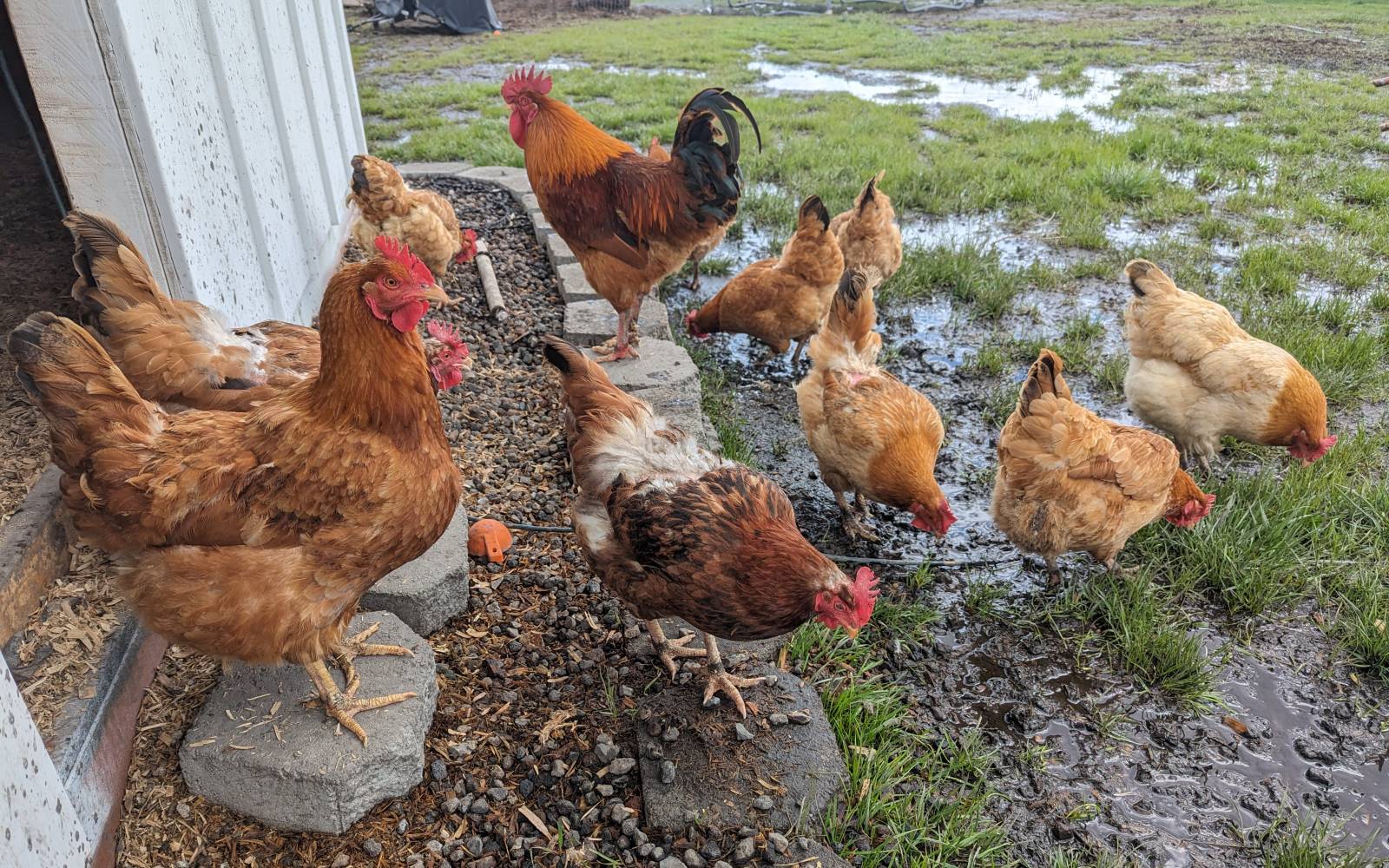
Judge a rooster by the condition and freedom of the hens, the quality of his alarm behavior, and his safety around people. Color and confidence are not enough.
I start by watching the hens
The hens give the clearest review. They should be able to eat, rest, and dust bathe without constant pursuit. A rooster that calls birds to food but strips backs, corners timid hens, or repeatedly interrupts nesting is not balancing his benefits with the cost he imposes.
I inspect backs, shoulders, and combs weekly during breeding activity. Bare feathers alone can have several causes, but broken skin, repeated hiding, or hens avoiding open ground are direct management evidence. Saddles can protect skin temporarily; they do not solve an incompatible ratio or relentless behavior.
Alarm behavior should add information
A rooster should notice movement and give calls the hens understand. The flock responds, checks cover, and then resumes normal activity when the pressure passes. Constant calling that keeps birds tense is noise, not protection.
I watch what happens after the alarm. Does he move toward cover with the hens, stand exposed while they settle, or start a chase? No rooster makes free range safe. His awareness is one layer behind secure housing, cover, and human supervision.
Human aggression is a separate test
A rooster that repeatedly stalks, flanks, spurs, or launches at people is a safety problem. I do not ask children or visitors to prove they can dominate him. Carrying a tool as a shield may get chores done for a day, but it is not a stable management system.
Adolescent posturing can change as a bird matures, but repeated attacks deserve a firm decision. Handling techniques and enclosure design may reduce conflict, yet the keeper still has to protect everyone who enters the yard. Rehoming should include honest disclosure; passing an aggressive bird to an unsuspecting household only moves the risk.
- No unsupervised child access
- Use a barrier during assessment
- Record the trigger and sequence of each incident
- Do not breed from behavior you would not accept again
Fertility changes the management job
If fertile eggs are not a goal, a rooster is optional. If they are, I track the number and size of hens, inspect for mating injuries, collect hatching eggs deliberately, and maintain a plan for male offspring. The decision is larger than whether the neighborhood permits crowing.
Breeding also makes record keeping more important. Temperament, leg health, vigor, and the condition of daughters matter more than an impressive silhouette. A rooster should be selected for the flock you want to keep, not because he happened to be the male chick in the box.
The final standard is an ordinary day
On a good day, the hens move freely and the rooster is part of the flock rather than the center of every interaction. He notices, calls, mates without excessive damage, and yields space to the keeper. The yard does not feel organized around avoiding him.
That ordinary-day standard keeps me from excusing a dangerous bird because he was brave once or attractive every day. Contribution is a pattern. So is harm.
A rooster is either useful or he is not
A rooster can be worth keeping, but not because he looks impressive standing on a fence post. The useful ones change the way the flock moves. They watch the sky, call hens to food, keep young birds from scattering, and put themselves between trouble and the group. The useless ones make noise, tear up hens, challenge people, and still fail to notice a hawk.
I do not keep a rooster for decoration. If he is going to eat feed, wake the yard, and breed hens, he needs to make the flock better. That is the standard.
The first thing I judge is behavior around people
A rooster that comes at people is a problem. I do not care how pretty he is, what breed he is, or whether someone on the internet says he is just protecting his hens. There is a difference between awareness and aggression. A good rooster can watch you closely without spurring your legs.
I pay attention when I carry feed, move buckets, open gates, or have a child near the run. If the rooster turns those normal chores into a standoff, he is not adding value. He is making the property harder to use.
Good flock manners matter
A good rooster does not treat hens like equipment. He should not chase them until they are ragged, pin the same bird all day, or interrupt every feeding. I want to see him call hens to food, let them eat, break up little fights without causing a bigger one, and breed without wrecking backs and feathers.
Saddles can help hens in a breeding group, but they should not be used to excuse a bad rooster. If several hens are losing feathers, hiding, or avoiding open ground because of him, the rooster is changing their life for the worse.
I watch what he does when something changes
The best test is not a calm afternoon. It is wind, a new object, a hawk shadow, a strange dog, or pullets being added near the flock. Some roosters become useful then. They call, gather, and move the hens. Others just panic louder than everyone else.
I remember the roosters that made chores easier: birds that kept hens near cover, gave distinct alarm calls, and yielded space to the keeper. That combination is uncommon enough to value.
References
Checked August 4, 2026 · How sources are chosen
Local predators, ordinances, climate, and individual birds may require a different choice. Health emergencies require a poultry-capable veterinarian.