Feeding · Guide 03
Feeding backyard chickens: a complete daily system
How to manage complete feed, water, grit, oyster shell, and treats through a normal day.
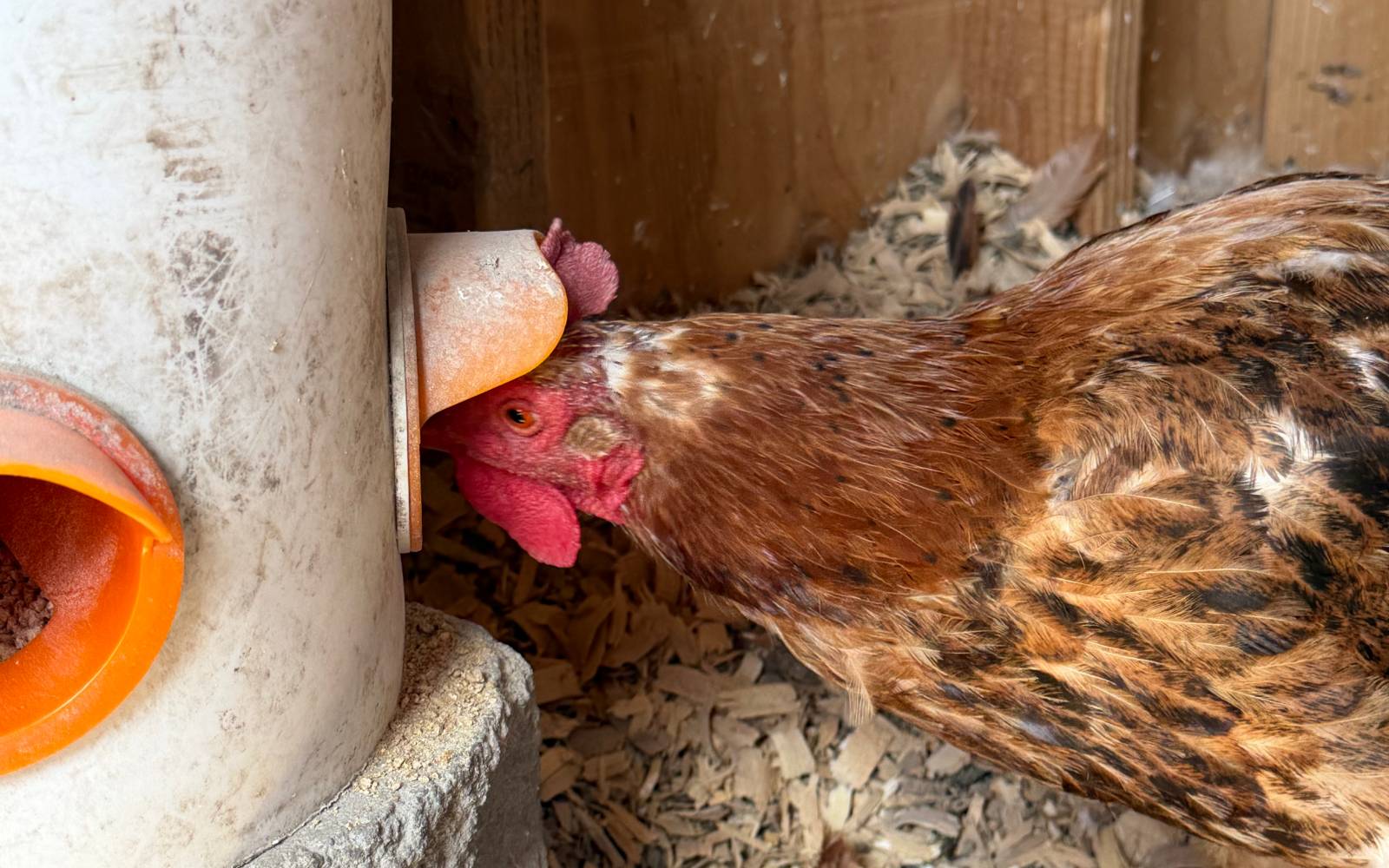
Let an age-appropriate complete feed do most of the nutritional work; treats and scraps should stay a small extra.
Complete feed carries the main load
A quality commercial ration is formulated to provide the protein, energy, vitamins, and minerals birds need at a particular life stage. Chicks need starter feed; growing pullets need a grower ration; laying hens generally need a layer feed or an all-flock feed with separate calcium.
Choose one feeding system and keep it consistent. Constantly mixing scratch grains, leftovers, and supplements makes it difficult to know how much complete ration each bird eats.
- Store feed in a dry, rodent-resistant container
- Discard feed that smells musty or shows mold
- Keep enough feeder space for timid birds to eat
Treat water as part of the feeding system
A hen can skip a treat without consequence; she cannot perform normally without clean water. Heat, freezing weather, algae, and bedding kicked into open pans can all interrupt access faster than a keeper expects.
Use a waterer you can scrub, keep it out from under roosts, and check that every bird can reach it. During extreme weather, check more than once a day.
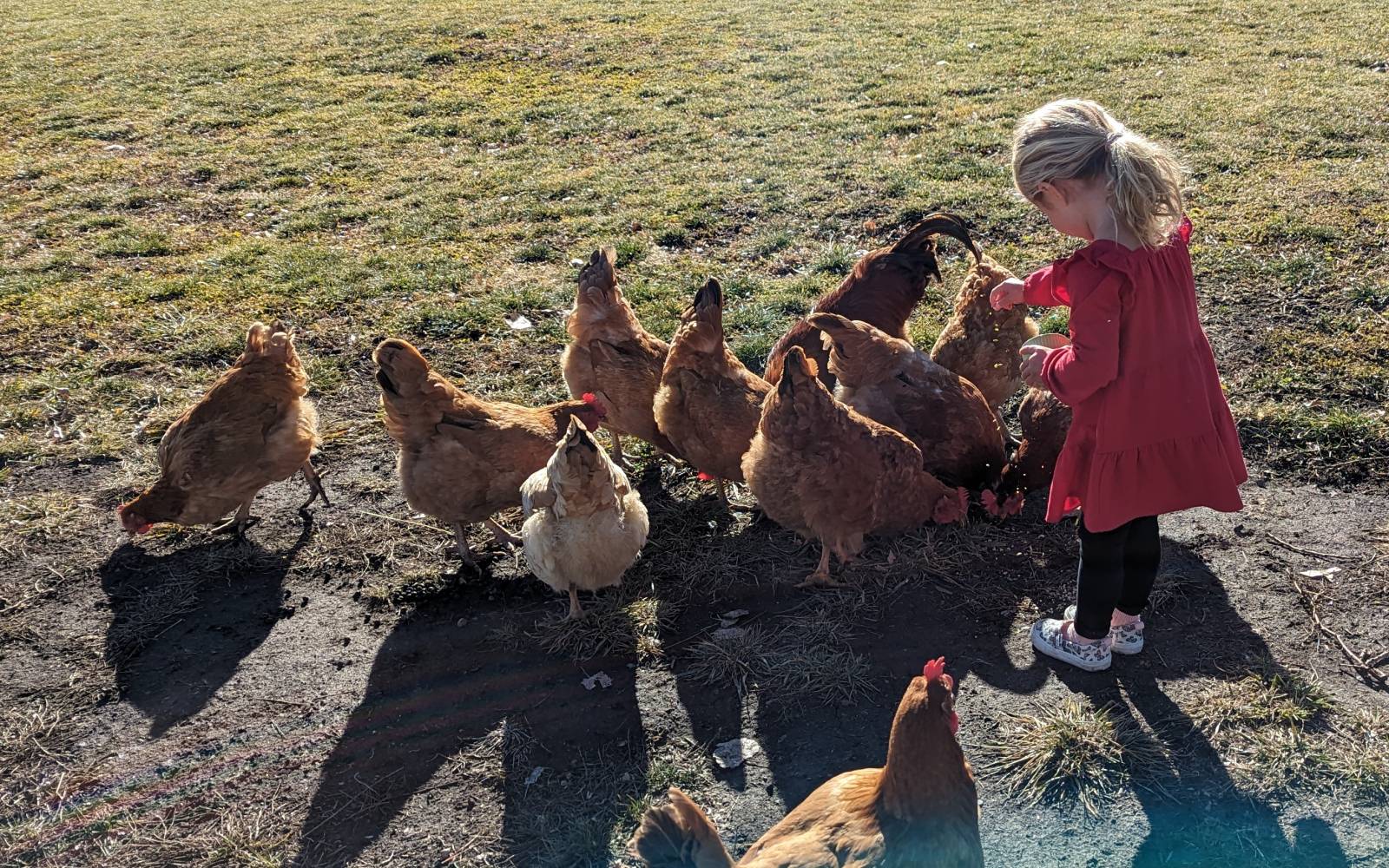
Use scraps for variety, not balance
Leafy greens, squash, pumpkin, cucumber, berries, melon rind, and small portions of plain cooked food can be enjoyable extras. Offer modest amounts after birds have access to their normal ration.
Never feed moldy or spoiled food. Skip very salty or greasy leftovers, dry uncooked beans, chocolate, coffee grounds, and alcohol. When an item feels questionable, the flock does not need to be the experiment.
- Keep treats below roughly ten percent of the overall diet
- Remove wet leftovers before they spoil
- Do not let scraps replace the morning appetite for complete feed
Keep grit and calcium straight
Birds that consume anything beyond finely milled feed need insoluble grit to help the gizzard grind food. Laying hens also need adequate calcium. Free-choice oyster shell allows active layers to take extra calcium without forcing the same amount on every bird.
A sudden change in shell quality is a management clue with several possible causes. Check feed intake, stress, flock age, and overall condition instead of assuming one supplement will solve everything.
What a dependable routine looks like
Choose a winter water system before the first freeze. A thermostatically controlled heated base or heated poultry waterer can work when it is rated for the location, kept dry, protected from birds and rodents, and checked every day. Keep a second waterer ready for outages or equipment failure.
A sound feeding routine is predictable: age-appropriate complete feed stays available, water stays clean, and scraps come only after birds have eaten their ration. Measure normal consumption closely enough to notice a sudden change.
That steadiness makes the flock easier to read. A bird that quits eating stands out faster. A shell problem is easier to interpret. A molting flock is easier to support. The more chaotic the feeding system, the harder it is to know what anything means.
Do not confuse being generous with feeding well
A large handful of food can look generous while diluting the ration. Consistent access to the correct complete feed does more for the flock than frequent extras.
A well-fed flock is not always the most indulged-looking flock. It is usually the one with good condition, decent shells, respectable feather quality, and a keeper who knows where the nutrition is coming from.
Estimate intake before diagnosing appetite
An adult laying hen often eats roughly a quarter pound of complete feed per day, but breed, weather, forage, and production change intake. Instead of treating that figure as a ration limit, use it to estimate whether the flock is consuming an ordinary amount. Measure what enters the feeder for several days and account for spillage before deciding the birds are eating too much or too little.
A sudden drop matters more than a small difference between flocks. Check whether feed is stale, damp, newly formulated, difficult to reach, or being taken by rodents. Then watch individual birds. A full feeder does not prove that a timid or unwell hen is eating.
- Record bags opened and the date
- Mark the normal daily refill level
- Look under the feeder for waste
- Watch the lowest-ranking bird complete a meal
Change feed without losing the signal
When a change is necessary, keep the old bag label and lot information, buy enough of the new ration to avoid another immediate switch, and transition gradually when the manufacturer permits it. If several birds change droppings, appetite, or production after a feed change, the dates and labels give you something concrete to investigate.
Do not build a homemade ration from online percentages unless a qualified poultry nutritionist has formulated it. Protein percentage alone does not describe amino acids, energy, minerals, vitamins, or the balance among them. A complete commercial feed is usually the most reliable and economical foundation for a small flock.
- Match feed to age and production stage
- Keep the feed tag until the bag is finished
- Use separate calcium rather than mixing unknown amounts
- Contact the manufacturer about odor, insects, or damaged pellets
Audit the feeding station once a month
Empty and clean the feeder, inspect seams for mold and insects, and check that the hanging height still matches the birds. Weigh one scoop so every caretaker understands what 'a scoop' means. Watch the flock for ten minutes after filling and note crowding, guarding, or birds eating from the ground instead.
Check body condition on a small rotating sample of hens. Egg numbers can stay acceptable while one bird loses muscle. A simple monthly record of weight and keel condition exposes gradual changes that the feed bill alone will not show.
Decision table
What to do with what you see
| Signal | Check next | Response |
|---|---|---|
| Feed use jumps suddenly | Spillage, rodents, wild birds, and weather | Measure waste and secure storage before rationing |
| Several thin shells | Complete-feed intake, heat, age, and calcium access | Restore the feeding system and track persistence |
| One bird loses condition | Individual access, crop, droppings, and health | Record weight and seek veterinary guidance if decline continues |
At the coop
Inspection checklist
- Store feed in a dry, rodent-resistant container
- Discard feed that smells musty or shows mold
- Keep enough feeder space for timid birds to eat
- Keep treats below roughly ten percent of the overall diet
- Remove wet leftovers before they spoil
- Do not let scraps replace the morning appetite for complete feed
- Record bags opened and the date
References
Checked August 9, 2026 · How sources are chosen
Breathing difficulty, uncontrolled bleeding, inability to stand, neurological signs, severe injury, or rapid decline require prompt professional care.